A BAYOU WITH A VIEW
The Arkansas Water Trails Program seeks to popularize and protect waterways like Bayou DeView.
By By Phillip Powell
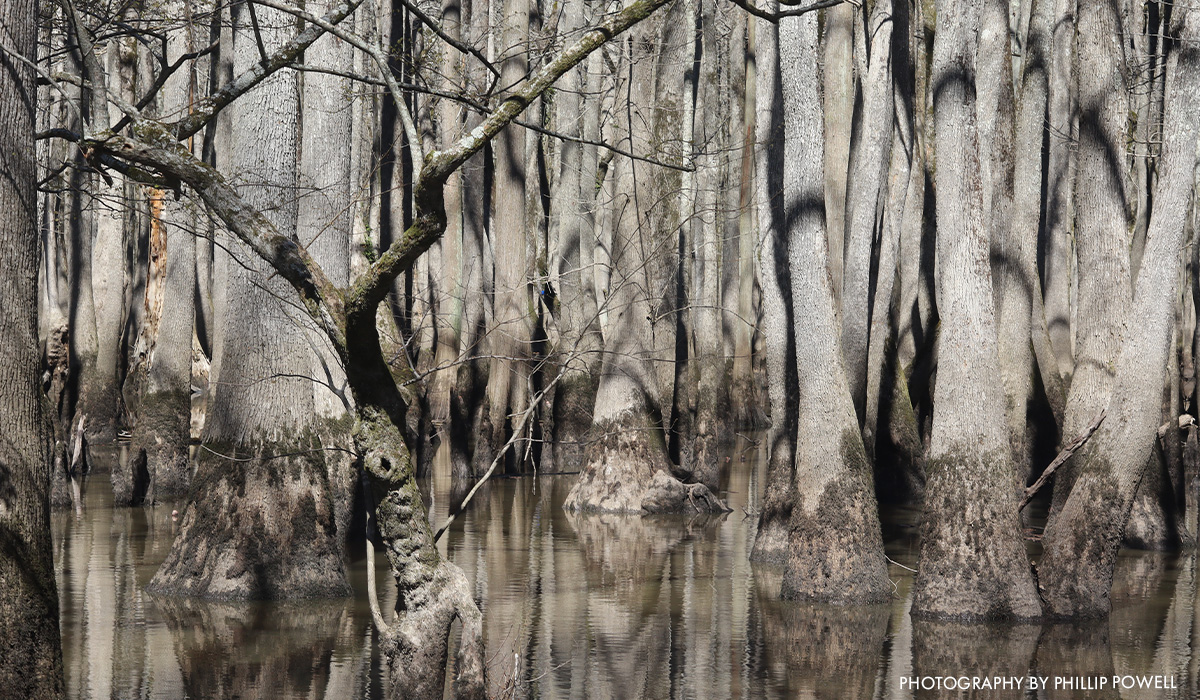
Everyone who paddles down Bayou DeView will get a sense of what the Arkansas Delta looked like centuries ago: a huge, living swamp.
The meandering Bayou DeView in the heart of the Arkansas Delta transports you into a quieter time where you can be immersed in one of the last American swamps largely untouched by human development. My own journey into the “Big Woods”—a 47,000-acre bottomland hardwood forest managed by the U.S. Fish and Wildlife Service—started with an unforgettable experience near Little Rock with a borrowed kayak from one of Arkansas’ foremost wandering conservationists. An initiative called the Arkansas Water Trails Program by the Arkansas Game and Fish Commission aims to make this forbidding swamp as accessible an outdoor adventure for Little Rockers as a sunrise hike up the rocky slopes of Pinnacle Mountain.
Once the site of the great hunt for the ivory-billed woodpecker, Bayou DeView is no stranger to the attention of outsiders. But from the days the nearby towns of Brinkley and Clarendon hosted hundreds of birdwatchers and scientists searching for that grand bird, the sleepy Delta towns haven’t seen much attention from anyone other than the duck hunters who have long hunted waterfowl among the cypress trees. The “Big Woods” of the Cache River National Wildlife Refuge were designated an internationally recognized wetland of importance by the Ramsar Convention in 1971, hosting the only native population of black bears in the largest contiguous bottomland hardwood forest left in North America. That fact alone would make you think the tourists would flock, but the problem is that there are few businesses or amenities in the towns along the bayou that could give tourists a fuller experience.
From its beginning point in Poinsett County, near the town of Weiner, Bayou DeView stretches over 83 miles through much of the Big Woods, ultimately meandering into the Cache River just a few miles southwest of Brinkley, in Monroe County. The Cache then flows into the swift White River near Clarendon, and the White meets the mighty Mississippi River in Desha County. At all of these confluence points, little Delta towns shrinking by the year dot the landscape. It’s no secret that the Delta has been depopulating. A region with some of the most fertile farmland and most unique little towns in the world looks to be increasingly abandoned even by people—like me—with fond memories of the landscape. With a declining population, an ailing farm economy, and people increasingly interested in the amenities of suburbs and metro areas like Northwest Arkansas, central Arkansas and even Jonesboro, the Delta needs a new identity in the 21st century.
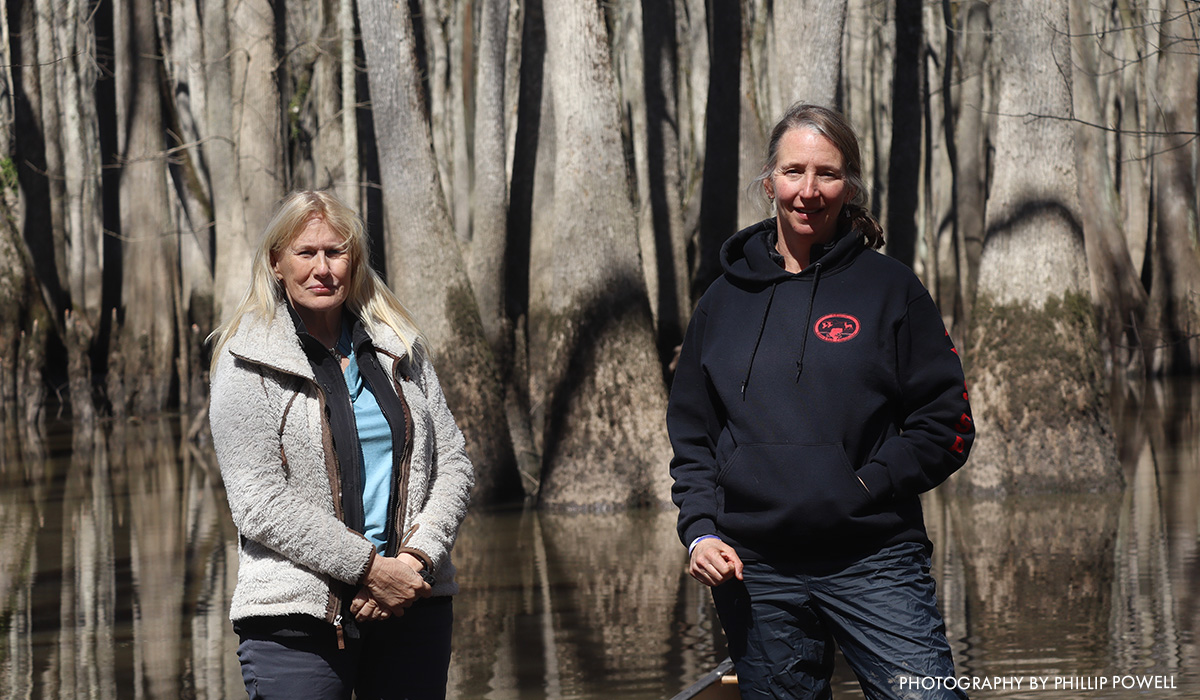
Debbie Doss (left) and Kirsten Bartlow have been working to develop a tourist friendly water trail system on many of Arkansas' most iconic rivers and streams. The Bayou DeView trail was marked and plotted by Doss and a few other volunteers over hours of trips down the bayou.
“It’s not an adrenaline rush, it’s a quiet, contemplative ‘getting back to nature’ type of experience.”
Under the leadership of Governor Sarah Sanders and First Gentleman Bryan Sanders, Arkansas communities are racing to embrace their own unique potential as outdoor recreation hubs under our official nickname of The Natural State. Mena is building a state-of-the-art bike park in the Ouachitas, outfitters continue to build upon the national draw of Buffalo River country, and both Two Rivers Park in Little Rock and nearby Pinnacle Mountain State Park are becoming increasingly popular outings in central Arkansas with plenty of amenities. Where does the Delta fit in?
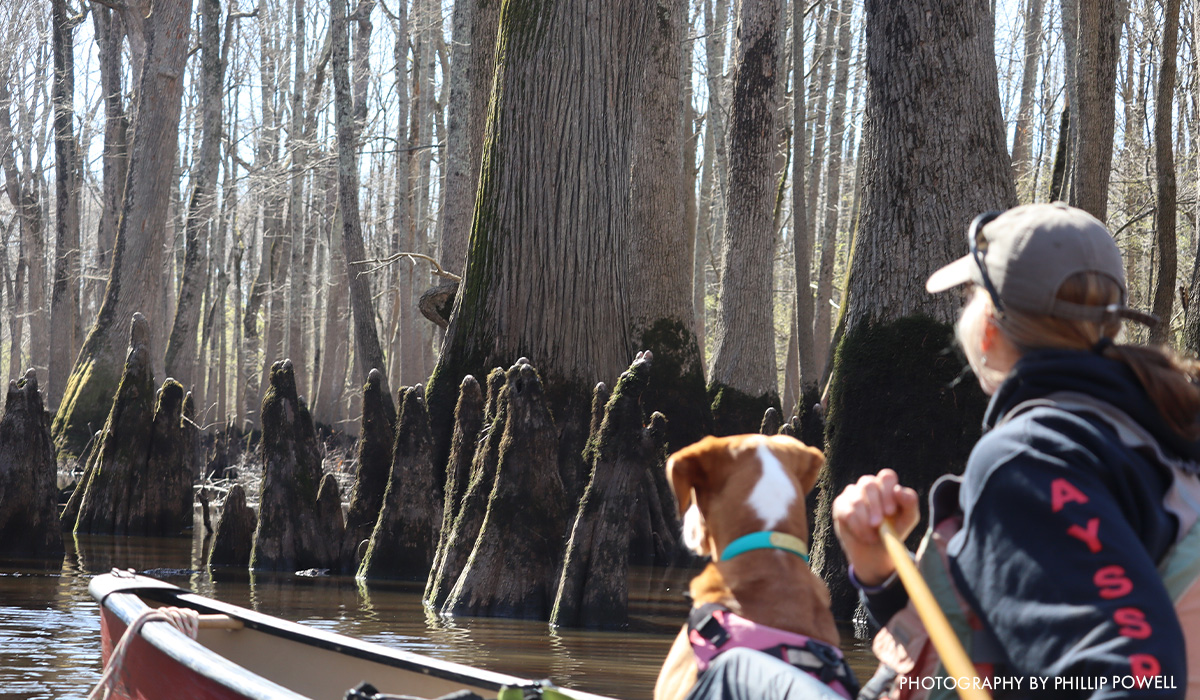
“People don’t think to come to the Delta to paddle, they associate the Buffalo River and the Ozarks with paddling. We are still educating folks about coming to this part of the state to do a completely different style of paddling. Here, you are going to hear and see wildlife,” said Kirsten Bartlow, watchable wildlife coordinator with Arkansas Game and Fish. Bartlow’s puppy, Sunny, proved to be the life of the bayou that day—though I was glad the adorable but very finicky dog was writhing around in Bartlow’s canoe rather than my little borrowed kayak.
Bartlow organized my excursion to Bayou DeView with conservationist and water trail expert Debbie Doss, who I borrowed the kayak from. Even before we set off, I glimpsed the real potential of the bayou to become an outdoor recreation hub in a state that seems to want more of those. You won’t find an exciting mountain biking trail or the rapids of the Cossatot when you’re paddling down Bayou DeView. But you will find a quieter, more relaxed outdoor experience among the cypress trees where you can almost convince yourself you are one of those early Delta explorers, hunting and trapping your way through the swamp, prospecting for timber and battling mosquitoes as you hike up to higher ground to set camp. Speaking of mosquitoes, that’s why you’re recommended to go during a nice, temperate day between January and April, though Bartlow and Doss are quick to dispel any fears about snakes or gators.
“The main thing that people are concerned about, and they are trying to address that with the water trails, but the main thing that keeps people away is the fear of getting lost. And that is a concern out here in the flooded timber, you can get really turned around and not know where you are or how to get back,” Doss said before we set off. “And people do have some misconceptions that mosquitoes and insects are horrible, and they are really not. It’s excellent during the winter, spring and fall. There is one season in the spring, where for about two weeks you get buffalo gnats. The mosquitoes are never terrible unless you come late in the summer and get in the trees.”
We had to postpone our outing long after the ideal time for a paddle through the Delta in January, as drought dropped the water level well below the necessary 14 feet until late February. When we set off on March 12, we first met at the Apple Lake access point, which is a straight shot east from Little Rock, and where a waterfowl rest area has been cultivated by the Game and Fish Commission. We turned north toward the Hickson Lake access point in the middle of the Sheffield Nelson Dagmar wildlife management area, where Bartlow, Doss, and other volunteers have marked the choicest part of the water trail over the years.
Doss has spent countless hours leading paddling tours through the Delta establishing the very water trail down Bayou DeView we would soon be paddling with her nonprofit, the Arkansas Watertrails Partnership. A few hours later, at the end of our journey, I had the outdoor experience I was looking for under my belt. But I also left with a foreboding sense that the remains of this ancient swamp might prefer to be left unbothered.
Drawing People to the Big Woods
The Arkansas Water Trail Program at the Arkansas Game and Fish Commission is only the beginning of making some of the Delta waterways accessible to the masses. And the trail program is run almost exclusively on the people power of committed volunteers. According to Bartlow, there are more than 20 water trails marked across the state, many of them in the Delta. The Bayou DeView trail is unique because at 15 miles of marked trail, it is one of the longest a paddler can find.
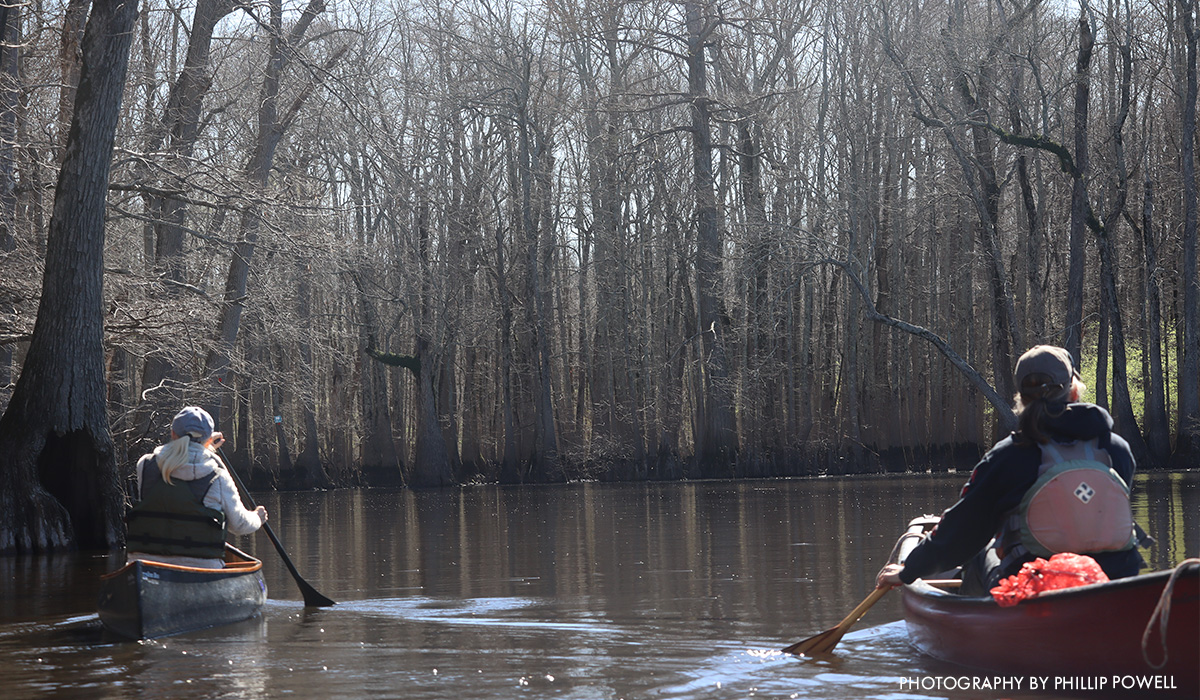
As we glided across Hickson Lake toward the trail, the cypress trees started looking a little thicker. As we slipped on to the trail, it started widening and narrowing at parts. My jaw dropped as I spotted a bald cypress, submerged at its roots, that looked to be at least 15 feet in diameter if not much larger. I quickly derailed the tour and paddled over for a closer look.
For those who have made it out to the California redwoods, you could easily relate to the comparison I made: That some of these great bald cypress, survivors of the Arkansas timber rush, deserve nothing less than the respect afforded the redwoods. We occasionally had to carefully guide our vessels through narrow gaps between trees or over fallen logs and limbs sticking out of the shallow water, adding some challenge and hustle to our lazy paddle. Doss said the trail can look different depending on the water level and the time of the year you paddle, giving the trail great potential for repeat trips. Bartlow cautioned that while the water never moves too fast, at high water levels the swamp can become dangerous.
After a stop for lunch on a little island that Doss and Bartlow said was rumored to be an old spot for moonshiners, we watched Sunny dash around while I pried them for insight on what they see as the future of the water trails program, and recreation in the Delta. The water trails will continue expanding, with AGFC dedicating the first trail on the Illinois River in Northwest Arkansas just a few days after our journey. As for the Delta, it will take a lot more investment for these trails to grow in popularity. Access points to Bayou DeView sit in pretty rural areas outside little towns; there are no outfitters and few hospitality establishments to offer the outdoor tourist much of an experience beyond the paddling itself.
While the swamp is a totally unique resource, it’s so remote and foreboding that it appeals only to those nature and history lovers who like to pick up a paddle, and who are also comfortable in the backcountry.
Several years ago, a group of serial paddling women adventurers from Missouri contacted Doss because they wanted to paddle through the Arkansas swamp. Now the group comes down every year, using the signs and markers Doss has installed to light their own way.
“I think when people get used to the idea and get past some of the myths about what a swamp is, a lot of people will enjoy it out here, And I have mixed feelings about that too, because I think this will always be a place where people who really appreciate nature can go. It’s not an adrenaline rush, it’s a quiet, contemplative ‘getting back to nature’ type of experience.” —DEBBIE Doss
“I think when people get used to the idea and get past some of the myths about what a swamp is, a lot of people will enjoy it out here,” Doss said. “And I have mixed feelings about that too, because I think this will always be a place where people who really appreciate nature can go. It’s not an adrenaline rush, it’s a quiet, contemplative ‘getting back to nature’ type of experience.”
Doss uses that group as an example of how the bayou can become a regular destination for paddlers. With some more marketing, Bayou DeView and its access to the Big Woods could become a more central part of the Delta’s identity in the coming years, but can these ancient trees really draw the commercial activity the state envisions and promotes at bike trails in Bentonville? Perhaps the better question is: Should they?
“State parks on the Delta Heritage Trail have made an opportunity zone around the trail for tax incentives and grants for small businesses that want to open, which is smart, because the Delta is a depressed community as far as someone having the funds to start,” Bartlow said. “This is an amazing resource but right now there aren’t the restaurants and Airbnbs and the things that people want.”
Some ideas for future expansion of the trail could start with setting up little docks for people who want to overnight camp along the water trail, or setting up self-serving kayak rental machines. Periodic flooding and the unfortunate threat of vandalism, along with the fact that the trails are being maintained on the goodwill of volunteers like Doss, makes further development on Bayou DeView and other water trails a tricky prospect.
As we made our way back toward Hickson Lake, Doss showed us a cypress with a rusted hook and chain buried into its bark a little higher than our heads. Her hypothesis is that because it’s hollow, it survived the timber rush of the 19th and early 20th centuries, when the Delta was initially deforested and converted to farmland. That hook is just a relic of the fate that almost befell it. And now, on this day—perhaps two hundred years later—it’s just the four of us quietly bearing witness to a swamp bearing the scars of the past, still trying to regrow. In the past, development interests were determined to strike the forest down. If development comes again, as some hope for, I can confidently say that most of us who paddled among the cypress hope for development that will preserve one of Arkansas’ hidden gems.